
Art, gender, and power in the Dutch Golden Age
An interview with SJP Lit author Victoria Redel

This week, we’re thrilled to be publishing I Am You, a riveting, layered novel in which Victoria Redel tells a story about the real-life painter Maria van Oosterwijck, who, despite the restrictive gender norms of her era—the Dutch Golden Age—was renowned in her own lifetime and remains so today. Still, very little is known about Oosterwijck’s life, and so Redel wrote into the negative space, producing a tale that’s just as much about its narrator, Gerta Pieters, who starts off as Van Oosterwijck’s servant and becomes her frequent model, her studio assistant, her lover, and, eventually, when Oosterwijck becomes incapacitated, her ghost artist.
It’s a book about art and beauty, sex and gender, power, and how the urge to create, as well as someone’s relationships and the world around them, informs that other creative act, the forging of the self. Below is our conversation with Redel about how she did it.

SJP Lit: How did you get the idea for this book?
Victoria Redel: Years ago, I walked into a store on the Lower East Side, Kremer Pigments. It’s since moved, but it was filled with these gorgeous jars of pure pigment. I left thinking that I wanted to write a book about paint.
Almost 20 years later, in preparation for spending time in Amsterdam, I read Russell Shorto’s book on the city, and it had maybe three sentences that said “little is known of the painter Maria van Oosterwijck, although her work was sold throughout Europe to formidable patrons.” I was curious: “Who is she?” I did what little research I could, but one story kept coming up: her family’s servant, Gerta, had become Maria’s paint preparer, and then her assistant, and eventually, Gerta became a bit of a painter in her own right. I was instantly interested in Greta because her story allowed for a great deal more transformation, and I thought, “Oh, that’s my paint story.”
SJP Lit: Even though not much is known about these women, how did you render their world and emotional lives so thoroughly? Also, when, in writing historical fiction, do you give yourself permission to stray from the record?
VR: I gave myself a great deal of freedom. For example, the notion held by art historians is that Maria never married because she was so devout. Experts point to the religious iconography in her work, but religious iconography was in every still-life painter’s art during that period. That seemed like a pretty flimsy and somewhat misogynistic way to perceive a woman who decided not to marry, so I broke from the idea of her devotion.
Was her piousness real, or was it a ruse to help get her what she wanted, which was a life devoted to work as an artist?
What abounds, and what I made great use of, is the history of that period — there’s so much that’s been written about the Dutch Golden Age, and we’re able to learn what life was like for people, who suddenly had a greater bounty of goods available to them because of the shipping trade. The fun thing about writing into a history that’s not my own is that I have to learn a lot. So, I learned and I learned and I learned. I also took a workshop at Kremer Pigments on making paint in the style of Renaissance artists, so I made green by grinding malachite, and I made glazes from eggs. But then I almost tried to forget it all, because you don’t want to feel the author’s desire to show how much they’ve learned — what every shoe buckle is made of or whether they’re wearing underpants or not wearing underpants, which, by the way, they didn’t.
SJP Lit: Can you list some of those traded goods that had arrived in Amsterdam, many of which appear in the book?
VR: There’s all the fruit. Pineapples, oranges. Exotic animals were traipsed around. And, of course, all the pigment. The color red was made from the female cochineal bug and its larvae, which the Spaniards began to import from Mexico.
SJP Lit: Have you ever dabbled in painting yourself?
VR: I was an art major in college and studied painting and printmaking. I was also writing poetry at the time. I had a fantasy that I would be William Blake. In the process of writing this book, I got interested in trying to have an art practice again. I say that with incredible humbleness bordering on embarrassment. Whatever hand I thought I had in college, I don’t have anymore. But it is fun to have something I’m not trying to be great at.
SJP Lit: There’s a tension between the styles of Vermeer and Rembrandt in the novel, and it’s interesting that Gerta appreciates Rembrandt and Maria does not.
VR: Rembrandt had fallen out of fashion and had created for himself such an extravagant amount of debt that he was living in poverty and not really celebrated by the end of his life. Maria falls in the camp of people who think he’s passé.
SJP Lit: Are you a fan?
VR: I love him. Like Gerta, I am in awe of his paintings. But like Maria, I’m a fan of Vermeer too.
SJP Lit: The Frick Collection recently had an exhibition called Vermeer’s Love Letters that included a number of paintings by him in which an upper-class person is depicted alongside their servant. It really gave you a sense of the tremendous intimacy that existed within those relationships. I kept thinking that the love referenced in the title was between the two people in the frame.
VR: Imagine what it was like to put a woman in a corset. If you were a servant, you were intimately connected to your master’s body. Also, houses were small, and there wasn’t a ton of privacy.
SJP Lit: Even though Maria is known for still-lifes, in the novel, she’s very attuned to bodies and how they move through space.
VR: I wanted to afford her that desire — to wish she could be painting the figure. In addition to a woman not being allowed in the artist’s guild, she wouldn’t have been allowed on occasions where groups of men would gather and hire a model to sketch.
SJP Lit: There are multiple ways that you emphasize that Maria and Gerta are women in a man’s world. At the same time, you allow them to exist in those spaces in a somewhat covert way.
VR: Their ability to be transgressive needed to be covert, and there are benefits to that, to not being watched. And though Gerta and Maria are both women kept out of the guild, there’s a hierarchy between them that’s another one of the tensions in the book.
SJP Lit: I like that both women are flawed and have or come to have pretty healthy egos. Arguably, it’s partly a story about what it is to be an art monster.
VR: There’s the question of how one gets ahead and at what cost to other lives, and that’s true inside of art. Maria, in particular, is a pretty complicated character who behaves in ways that are egregious, and yet, I love her. She’s ambitious. How else did she become someone that the Emperor Leopold knew of and bought from?
SJP Lit: How would you describe the greater transformation that Gerta undergoes, which you mentioned earlier?
VR: In becoming an artist, she starts to see the world differently. That’s encouraged, first because of her role as Maria’s companion. Maria asks her questions like “What do you think?” “What do you notice?” and in that process of being taken seriously, how she lives in the world changes for her, and her own ambition begins to manifest. What’s the point at which you’re willing to subjugate yourself for the other is a central question of the book. Certainly, it’s a problem for Gerta.
SJP Lit: Another thing this book does is raise questions about authorship and pushes back against the idea of singular genius, although usually that’s something that we are told to associate with men.
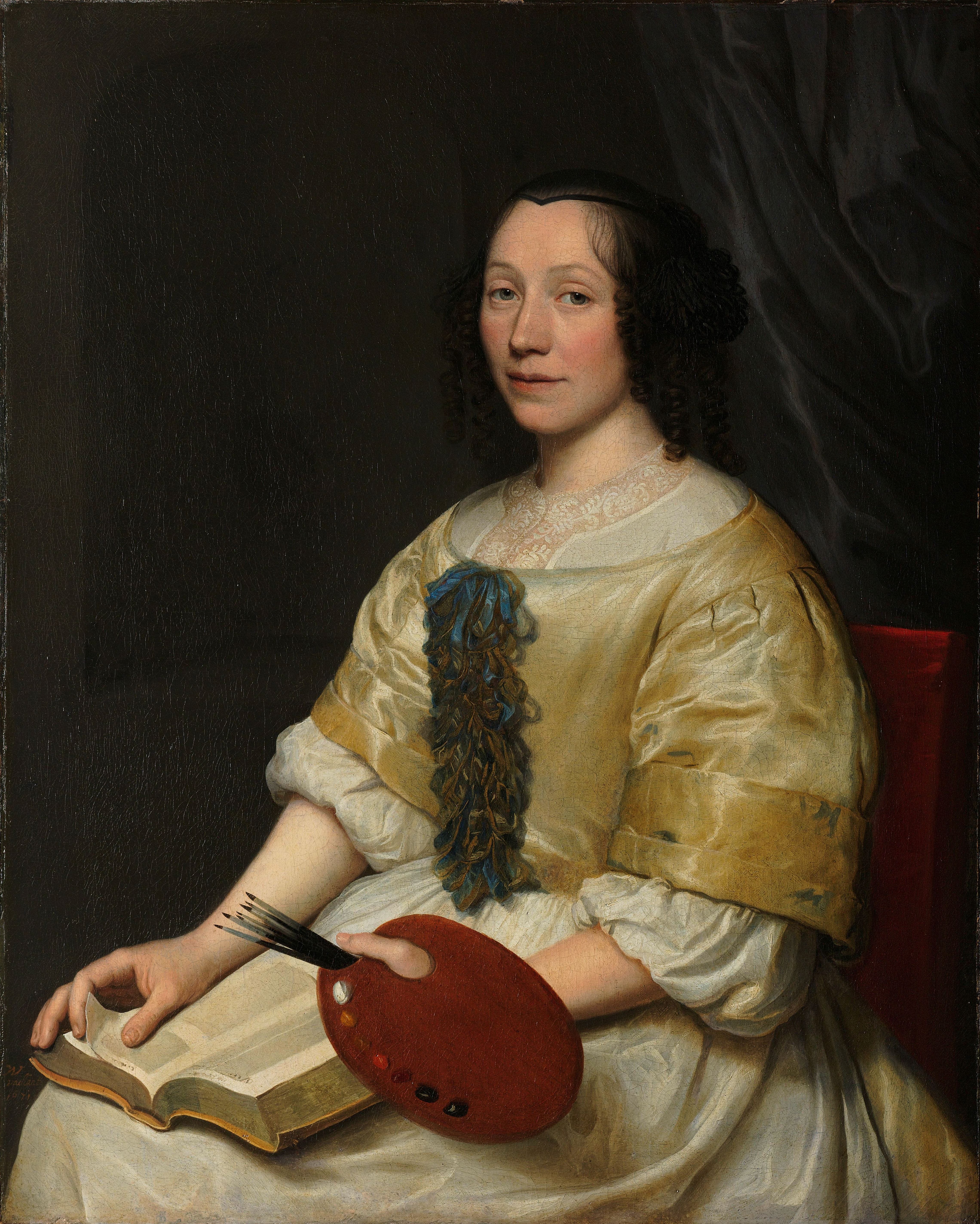
VR: Workshops were populated by assistants who learned to paint in the style of the artist. Gerta learns to paint as essentially Maria’s third hand. This becomes complicated for them as circumstances change. We’re fascinated by that, right? A friend of mine who read the book asked if it was usual for an artist to have assistants, and I told her it still is. Jeff Koons has a huge number of people who work for him. Damien Hirst, too.
SJP Lit: I also wanted to ask about your process. Did you make discoveries as you went?
VR: I work not knowing where I’m going. I’ll write a scene, and I’m so relieved to have a scene that I keep going. But by the second or third draft, I think, “Oh, that scene is too obvious, and what if I took a very different tack? Perhaps because I started as a poet, I find my writing tends toward compression, so I have to work to dilate the story. The section where they go to London was originally four pages. Now, it’s more like 40. Maybe, to use an art metaphor, those four pages were kind of me sketching.
SJP Lit: Did you look at any other novels about artists for research?
VR: I tried to avoid novels about artists when I was writing a novel about artists, but there’s one by David Malouf about Ovid called An Imaginary Life that I found to be wild and beautiful and uncanny when I read it, and that I would recommend. What I did read was the Da Vinci biography by Walter Isaacson — beautiful — and there’s Vasari’s book The Lives of the Artists. He kind of dishes on artists, going through who’s good and who’s overrated.
SJP Lit: Would you say that your writing process feels akin to a studio practice in that it requires the same sort of dedication, that a big part of it is getting yourself to your desk, even on days you don’t want to?
VR: My writing life wasn’t completely concurrent with having children, but I had kids, and I wanted to be a writer, and I had to work. I mapped out very clear times that I would be at the desk, and I still keep to a rigorous schedule. There are periods of time when that goes out the window, and I’m not as disciplined, but I like the act of coming to the desk and finding my way into the work. I know that if I get there, I’ll start to play with sentences, even if it’s slow. There are many days when all I write is a paragraph. I know that it won’t be fun all the time, but it’s where I want to be.

Victoria Redel isn’t the only one to have revisited the Dutch Golden Age as of late. If I Am You leaves you wanting more of the period:
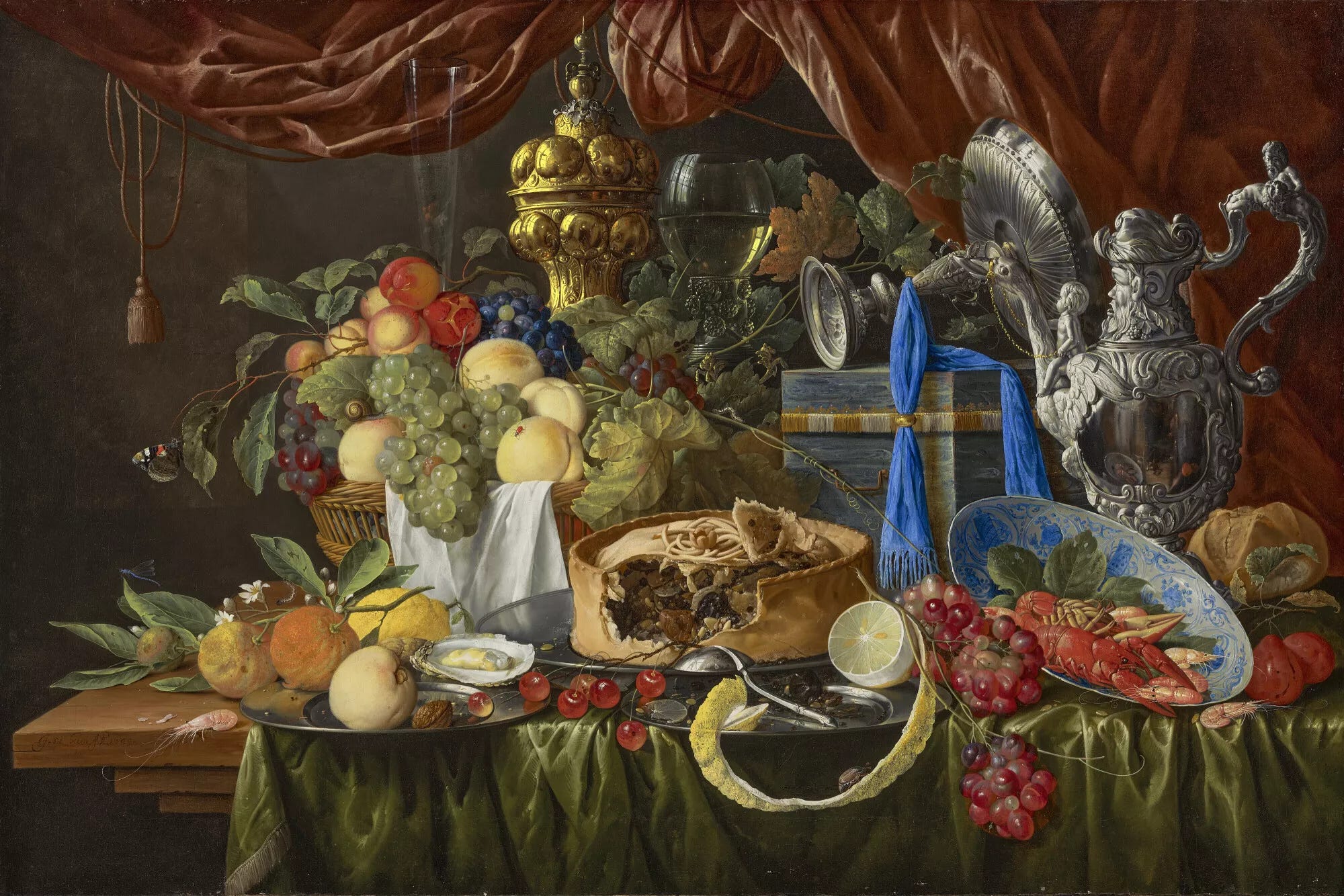
This July, The Observer reported that the Old Masters are making a comeback in the London art market. Earlier that month, a still life with grapes, crawfish, and a partially eaten pie by the 17th-century painter Jan Davidsz de Heem sold for nearly £4 million.
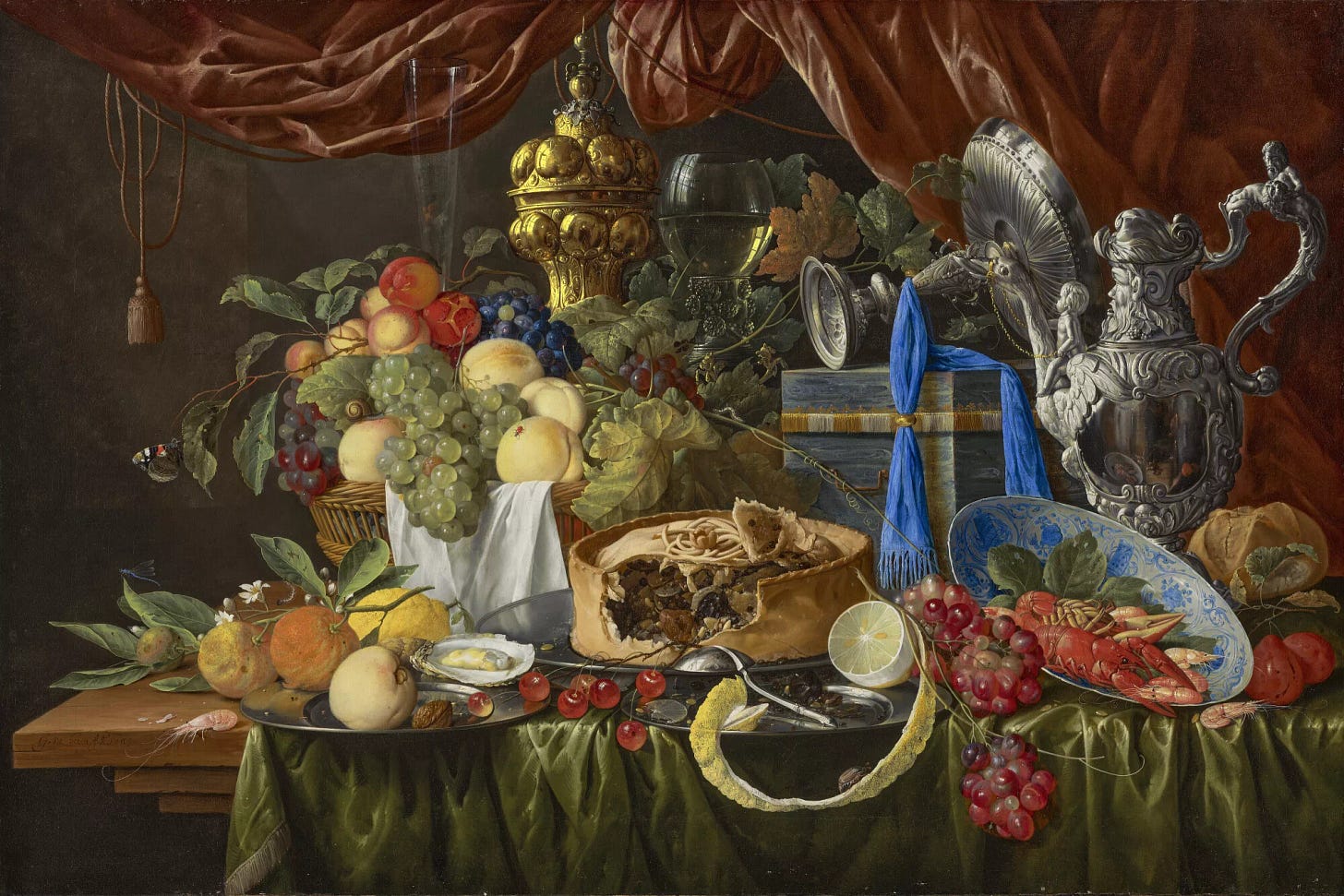
Jan Davidsz De Heem (Utrecht 1606-1684) In 2023, Dutch TV aired a popular reality series, De Nieuwe Vermeer, in which artists competed to recreate supposedly lost paintings by Johannes Vermeer.
Opening in May of next year at the New York Historical Society is Old Masters and New Amsterdam, which will gather paintings by Rembrandt and his contemporaries to give a sense of life in the Dutch settlement that became New York City.
And it’s not too late to snatch up pieces from JW Anderson’s capsule collection of clothing pieces featuring one of Rembrandt’s self-portraits.

JW Anderson blue sweatshirt and patterned shirt


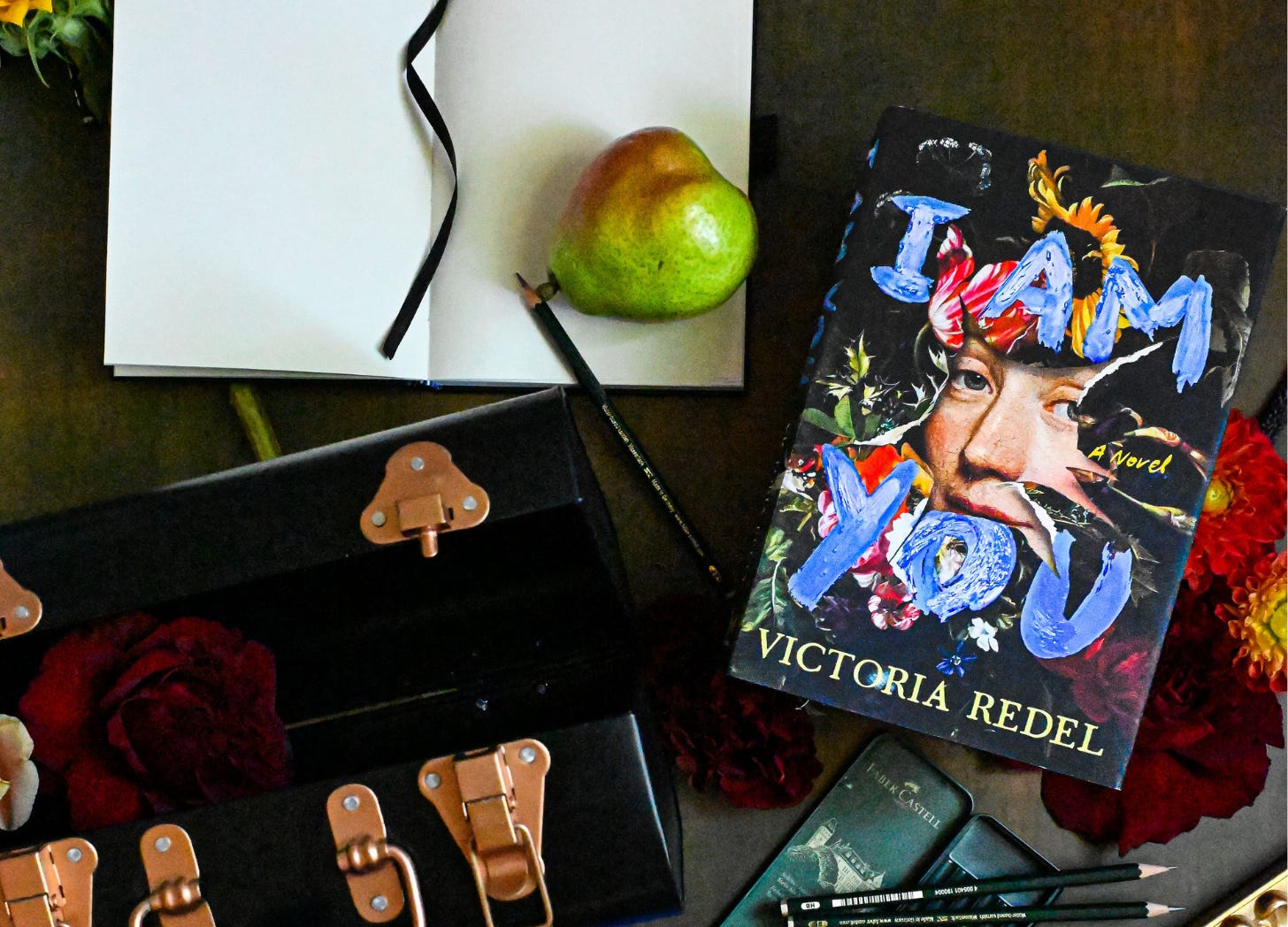
Comment with your favorite artist—painter, musician, writer, etc.—below, and enter to win our I Am You-themed artist’s box, which includes…
a copy of I Am You
a one-of-a-kind print from Maura Spain, who created an original piece inspired by I Am You
your own sketchbook and pencil set
I watched SJP and VR this morning and ever since I’ve been thinking about this book. I just finished Tracy Chevalier’s The Glassmaker so Im very taken with historical fiction as well as the arts. My favorite art these days is contemporary and a bit abstract. I’m obsessed with color and also craft. No real favorites though.
I find it so interesting how your style changes throughout your life, I love Picasso and now and previously thought the classic renaissance was the best. Like Gothe said "A man should hear a little music, read a little poetry, and see a fine picture every day of his life, in order that worldly cares may not obliterate the sense of the beautiful which God has implanted in the human soul". This is what art, music and literature provide - beauty.